
A failed differential-pressure sensor can look like a simple replacement job. In practice, choosing a new transmitter only by matching the old output signal can reproduce the original problem—or introduce a new one.
Differential-pressure sensors sit inside important HVAC control and maintenance functions: filter status, airflow measurement, duct static pressure, room pressure, building pressure, fan control and chilled-water differential pressure. The correct replacement depends on what is being measured and how the BMS uses the signal.
Start with the application, not the label
Old labels may be unreadable, obsolete model codes can be incomplete, and the installed range may not match the original design. Before selecting a replacement, determine the measurement purpose and compare it with the actual operating conditions.
- Filter differential pressure: indicates the pressure drop across a filter and supports maintenance decisions.
- Airflow measurement: uses differential pressure across a flow station, pitot arrangement or other primary element to calculate flow.
- Duct or plenum static pressure: provides feedback for fan speed and pressure control.
- Room or building pressure: measures very small positive or negative pressure relationships.
- Wet-to-wet differential pressure: measures the difference between two liquid pressure points across pumps, coils, strainers or heat exchangers.
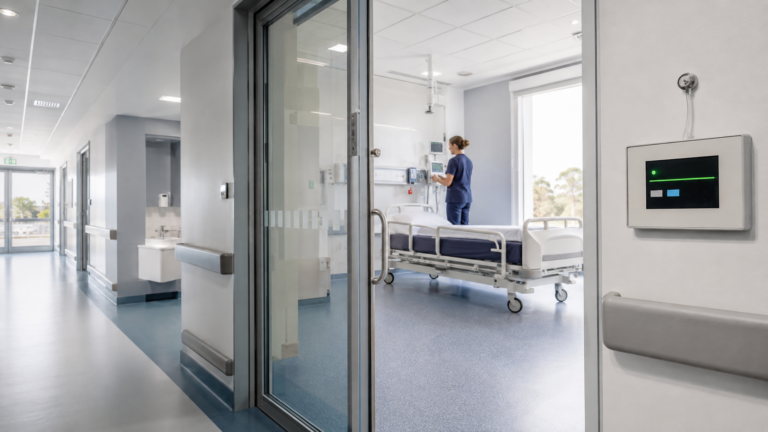
- Stairwell or smoke-control pressure: may form part of a life-safety system and must be reviewed against the approved design, fire engineering requirements and commissioning procedures.
The replacement checklist
| Check | Why it matters |
|---|---|
| Pressure medium | Air and non-corrosive gas sensors are not interchangeable with wet-to-wet liquid transducers. Confirm the fluid and material compatibility. |
| Range and direction | Confirm the expected operating value, full-scale range and whether measurement is unidirectional or bidirectional. An excessively wide range can reduce useful resolution. |
| Accuracy | Accuracy should suit the control function and the selected range. Very-low-pressure room applications generally need closer attention than broad filter-status indication. |
| Output signal | Check whether the BMS expects 0–10 V, 0–5 V, 4–20 mA or another interface. Confirm scaling in the controller as well as the transmitter. |
| Power supply | Verify AC or DC supply voltage, common wiring and whether the existing installation is two-wire or three-wire. |
| Mounting and enclosure | Check wall or duct mounting, conduit entry, environmental exposure, access for zeroing and available space. |
| Pressure pickups and tubing | Leaks, blockages, damaged tubing, poor pickup locations and reversed high/low ports can make a new sensor appear faulty. |
| BMS logic and alarms | Confirm engineering units, scaling, control setpoints, alarms, delays and trends before the old device is removed. |
Why “multi-range” still requires engineering judgement
Field-selectable sensors can reduce stockholding and make replacements easier, but the available range must still be appropriate to the application. A sensor should provide stable performance across the selected range rather than relying on an extreme electronic turndown that can increase noise or reduce useful stability at very low pressures.
Setra offers fixed-range and multi-range differential-pressure transducers for HVAC and critical applications. The Model 264 is widely used for low differential-pressure measurement in building automation, healthcare and pharmaceutical facilities. The Model 267 and 267MR provide configurable range, accuracy, enclosure and mounting options for demanding HVAC applications.
Commission the complete measurement chain
A successful replacement is not proven merely because the BMS displays a number. Commissioning should verify the physical pressure, transmitter output, controller input and displayed engineering value as one complete chain.
- Record the existing BMS value, output signal and operating condition before removal.
- Inspect and test the tubing, pressure pickups, valves and fittings.
- Mount the replacement in the correct orientation and connect the high and low ports.
- Select the range and output, then confirm the BMS input scaling.
- Zero the transmitter in accordance with the manufacturer’s instructions.
- Apply or create a known differential pressure and compare the physical reference, transmitter output and BMS display.
- Test control response, alarms, delays and trend recording under realistic conditions.
- Update drawings, point schedules, asset records and the replacement model reference.
Common causes of repeat call-backs
- Replacing the transmitter without finding a split or blocked pressure tube.
- Using the old BMS scale with a different replacement range.
- Reversing high and low pressure connections.
- Selecting a broad range for a very-low-pressure application.
- Zeroing the device while differential pressure is still applied.
- Ignoring velocity pressure errors caused by a poor duct pickup arrangement.
- Changing a life-safety or critical-environment device without checking the approved specification and required verification.
Controls Direct Differential Pressure Replacement Review
Controls Direct can review an existing differential-pressure sensor and provide a practical replacement or upgrade recommendation. Send a clear photograph of the label and wiring, the BMS point details, the application, the expected pressure and the available supply voltage.
- Cross-reference the obsolete or unavailable sensor.
- Check pressure range, output, power supply and physical arrangement.
- Identify any information that must be verified on site.
- Recommend a suitable Setra option and commissioning checks.
- Provide a budget quotation and availability.
A good replacement matches the measurement purpose, not just the wiring terminals.
Have a failed, obsolete or unreliable HVAC pressure sensor? Send Controls Direct the model number and application for a replacement review.
Technical references
- Setra differential-pressure sensor range
- Setra Model 264 low differential-pressure transducer
- Setra Model 267 low differential-pressure transducer
- Differential pressure for HVAC filter status and airflow
Request a differential-pressure sensor review
Complete the short project enquiry form. Tell us about the existing sensor, measurement range, output signal and application, and Controls Direct will review the replacement options.